 Panacea Bio ChemTechnical Preprint · Multi-Receptor Peptide Design
Panacea Bio ChemTechnical Preprint · Multi-Receptor Peptide Design
Panacea Bio ChemTechnical Preprint · Multi-Receptor Peptide Design
1Panacea Bio Chem Ltd, United Kingdom · correspondence via panaceabiochem.co.uk
All of these peptides were synthesized, tested in vivo and in vitro, and are undergoing clinical trials as we speak — although many further details remain secret.
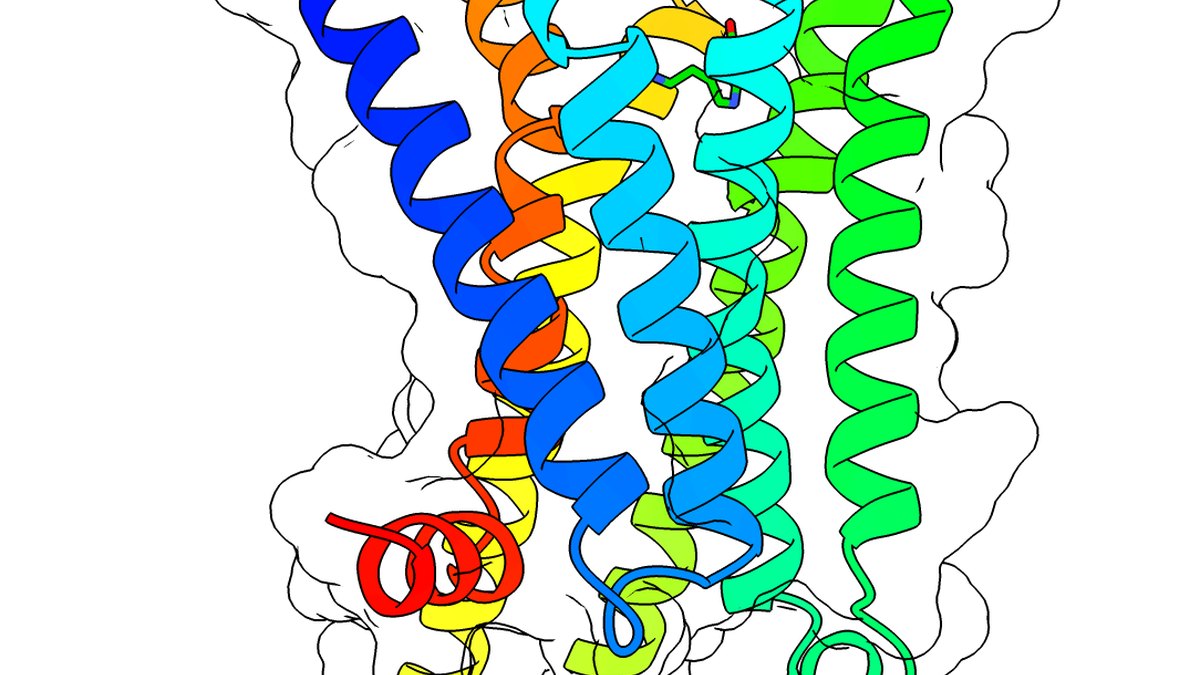
Poly-agonism is the design of a single peptide that switches on several receptors at once — one molecule doing the work of a drug cocktail. The idea moved from theory to clinic through the incretin hormones: first single GLP-1 agonists, then dual GIP/GLP-1 agonists such as tirzepatide5, then triple GLP-1/GIP/glucagon agonists such as retatrutide6. Each step adds a receptor to the same molecule, and each step is harder, because the relative potency at every target has to be tuned into one amino-acid sequence. This preprint explains poly-agonism in plain language, walks the mono → dual → triple progression and the hexa-agonist concept beyond it, and frames where Panacea Bio Chem works: designing balanced multi-receptor chains — and keeping an engineered chain intact all the way to the patient.
Keywords: poly-agonism · multi-receptor agonist peptide · unimolecular multi-agonist · dual agonist · triple agonist · triagonist · hexa-agonist · incretin · GLP-1 · GIP · glucagon · unimolecular polypharmacology
Most drugs are keys cut for a single lock. A molecule finds one receptor, turns it, and produces one effect. That is clean, but biology rarely turns on a single switch. Metabolism, appetite and energy balance are run by a committee of hormones acting on different receptors, and nudging just one of them often lets the others quietly compensate.
A poly-agonist answers that with a different idea: build one molecule that turns several locks at once. Instead of prescribing a cocktail of separate drugs — each with its own dose, its own timing, its own half-life — you hand the body a single peptide that carries several instructions inside one sequence. Because the activities travel together on one molecule, they cannot drift apart the way a loose combination does.
This is not a thought experiment. It is the mechanism behind the most consequential metabolic medicines of the decade. The progression is simple to name and hard to build: mono → dual → triple agonist, each rung adding one more receptor to the same chain. The word for the whole approach is unimolecular polypharmacology1 — many actions, one molecule.
An agonist is a molecule that binds a receptor and activates it — it presses the button rather than merely blocking it. A poly-agonist presses several buttons on several different receptors. The trick is that a peptide is a chain of amino acids that folds into a specific shape, and each receptor recognises a particular shape. Making one chain that fits — and activates — two, three or more different receptor pockets means finding a sequence that is a good enough key for each lock without being a perfect key for none.
Nature handed peptide chemists a gift here. Several of the gut and metabolic hormones — glucagon, GLP-1, GIP — belong to one family and share a common ancestral backbone2. Because they are already structural cousins, a single, carefully engineered chain can be nudged to fit all of their receptors at once. That shared scaffold is why the incretin field, and not some other corner of biology, produced the first great poly-agonists.
Designing a poly-agonist is an exercise in deliberate compromise, run roughly like this:
The clinical case for poly-agonism is that combined receptor actions can do together what none does alone — and the field has climbed the rungs quickly. But every rung upward multiplies the design burden. The table is the map of that climb.
| Rung | Receptors engaged | Representative peptide | Design burden |
|---|---|---|---|
| Mono-agonist | GLP-1 | Semaglutide, liraglutide | One receptor to satisfy |
| Dual agonist | GIP + GLP-1 | Tirzepatide | Two potencies to balance |
| Triple agonist | GLP-1 + GIP + glucagon | Retatrutide | Three-way balance; glucagon adds risk |
| Beyond triple | + amylin, PYY, others | Investigational | Every added receptor re-opens the balance |
| Hexa-agonist (concept) | Six receptors in one chain | Frontier / concept | The full poly-agonism problem, at once |
Notice what climbs alongside the benefit: the balancing problem. Two receptors are two dials; six receptors are six dials that all interact, where turning any one shifts the others. Add half-life, manufacturability and the need to keep an increasingly engineered, non-natural sequence folded and intact from synthesiser to syringe, and the design space narrows fast. Designing the sequence is the visible half of the work; making a balanced multi-receptor chain that survives into a usable dose is the quieter, harder half.
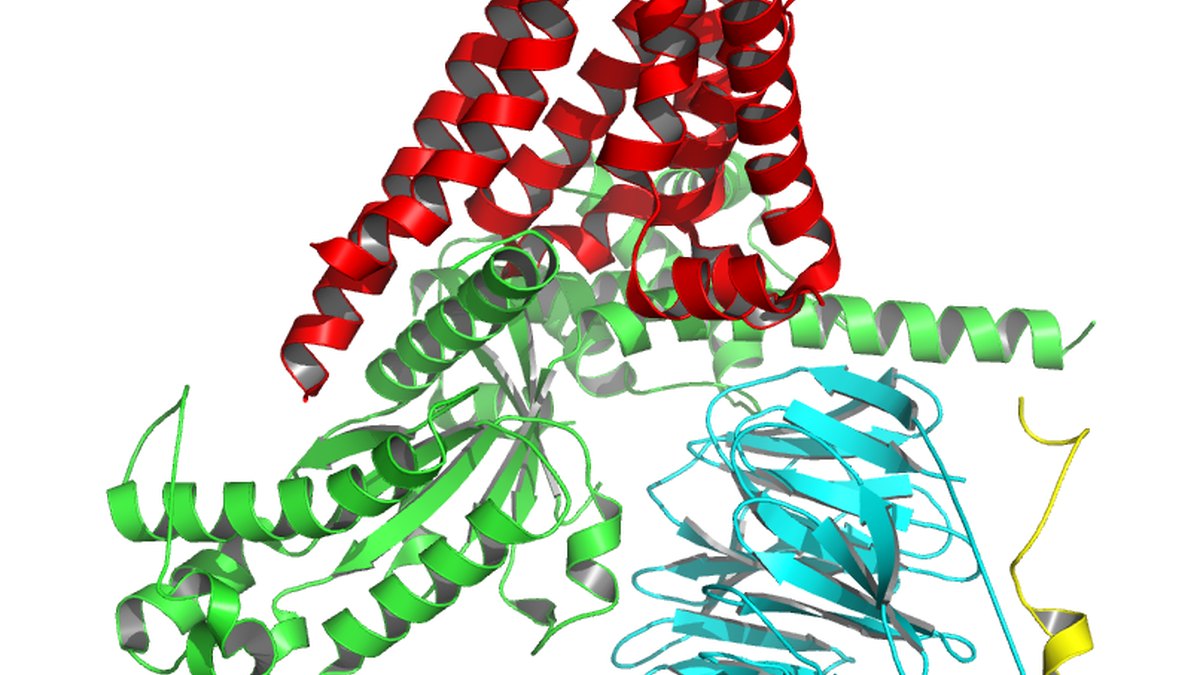
Multi-receptor agonist design — building one engineered chain that speaks to several receptors in balance — is precisely the ground Panacea Bio Chem treats as its focus. Panacea builds custom amino-acid chains to purpose, and reads the poly-agonism problem as two coupled challenges: getting the balance of receptor activities right in the sequence, and then keeping that engineered, often non-natural chain intact through synthesis, drying, storage and reconstitution. Its ongoing work explores proprietary methods aimed at exactly those failure modes:
The exact sequences, receptor-balance strategies, parameters and hardware that make this work repeatable remain proprietary to Panacea Bio Chem — the outline is here; the recipe stays behind the door.
Within multi-receptor agonism, Panacea Bio Chem's own line of work approaches the hexa-agonist concept — the design of a single peptide intended to act in balance across six receptors rather than the two or three of current dual and triple agonists. The specific targets, sequence strategy and balancing method are held by Bogdan Dicoias and are treated as investigational; they are not disclosed on this page, and nothing here states a clinical claim on his behalf. What is stated is the direction: one carefully balanced molecule, more receptors, the same insistence on a chain that survives intact to the point of use.
Poly-agonism has an origin story, and it begins with a venomous desert lizard that eats only a handful of times a year. In the early 1990s the endocrinologist John Eng, studying the venom of the Gila monster (Heloderma suspectum), isolated a peptide he named exendin-43. It closely resembled human GLP-1 but, remarkably, resisted the enzyme that chews GLP-1 apart within minutes — which is exactly why a lizard that gorges rarely needs a hormone signal that lingers. Exendin-4 became exenatide, the first GLP-1 receptor agonist medicine. A single receptor, a single lizard peptide: the mono-agonist era.
The leap to poly-agonism came from a different insight. In the 2000s Richard DiMarchi, Matthias Tschöp and colleagues noticed that glucagon, GLP-1 and GIP were structural relatives, and asked whether one engineered chain could deliberately hit two of their receptors in balance — a unimolecular dual incretin4. It worked. A rationally designed single peptide out-performed the individual hormones, and the "twincretin" idea was born. A triple agonist — GLP-1, GIP and glucagon in one molecule7 — followed, and then reached the clinic as retatrutide. From a lizard's patient metabolism to a molecule that turns three locks at once, the arc is one long answer to a single question: how many jobs can we fold into one chain? The hexa-agonist concept is the next place that question points.
Poly-agonism earns the most wherever a disease is run by a committee of signals rather than one — where hitting a single receptor lets the others compensate:
Each of these shares a dependency the headlines often skip: the more receptors a molecule is engineered to hit, the more finely balanced and the more non-natural its sequence becomes — and the harder it is to keep folded and intact from synthesis to dose. That dependency is the thread tying multi-receptor design back to preservation, and to Panacea's work.
What is a multi-receptor agonist peptide?
A single peptide — a
poly-agonist — designed to switch on several receptors at once, so one
molecule does the work of a drug cocktail. The clearest examples are the incretin
agonists: dual GIP/GLP-1 agonists such as tirzepatide, and triple
GLP-1/GIP/glucagon agonists such as retatrutide.
Why hit several receptors with one molecule instead of combining drugs?
One molecule shares a single dose, a single half-life and a single manufacturing
route, and its receptor activities move together in the body rather than drifting
apart the way separate drugs do. The cost is design difficulty: each receptor's
relative strength has to be tuned into one sequence.
What does hexa-agonist mean?
The concept of a single peptide built to
act as an agonist at six receptors at once — the far end of the
mono → dual → triple progression. It is a design ambition and an
area of investigation, not a marketed drug class. Panacea Bio Chem treats
multi-receptor agonist design as a focus of its peptide work.
What is the hardest part of designing a poly-agonist?
Balance. The
molecule has to hit each receptor with the right relative strength; too much
at one target and too little at another can cancel the benefit. Tuning several
potencies, plus half-life and manufacturability, into one sequence — and keeping
that engineered chain intact through drying and storage — is the real challenge.
Nothing here is medical advice.
Recent developments in the field — refreshed 2026-09-08 by Panacea Bio Chem.
The Panacea Technology Universe
Proprietary Panacea Bio Chem Ltd technologies, invented by Bogdan Dicoias — what each one does, and why it leads its class.
 Lyoprester®The only dual-chamber cartridge that is autoreconstitution-enabled, vacuum-sealed and argon-fillback.lyoprester.com ↗
 P-EARLs™Panacea-Engineered Aseptic Reconstitution Liquid(s) — each tuned to the peptide it wakes.p-earls.com ↗
 Peptourbillon™The layered peptide formulation architecture — single- or multi-layer, never a blend.peptourbillon.com ↗
 RF Tunnel™The RF-formed central channel through the cake.rftunnel.com ↗
 TgShift™Raises the cake’s glass-transition temperature with RF — instead of chilling below it.tgshift.com ↗
 Cryolapse™Cryogenic pressure collapse under S3Pulse™ control — vapour redistributed through the whole cake, not its surface, impeding crust formation.cryolapse.com ↗
 LyoLevit™The cake levitates and spins in high orbit — driven by ultrasound and RF.lyolevit.com ↗
 Lyochrysalis™The integrated chamber housing the whole drying stack.lyochrysalis.com ↗
 S3Pulse™The control brain for every piece of Panacea hardware.s3pulse.com ↗
 Liquiprester™The single-liquid cartridge engineered so multiple peptide APIs coexist in one shared vehicle.liquiprester.com ↗
 Syntheseract™Continuous-flow peptide synthesis in a special, very fast and economical way.syntheseract.com ↗
 CFSPPS™Continuous-flow solid-phase peptide synthesis, written as its own category.cfspps.com ↗
 OxyDeplete™Degassing plus no-headspace doctrine — the oxygen-starved seal.oxydeplete.com ↗
 ArgonLock™The final inert-atmosphere lock under argon.argonlock.com ↗
 RedoxVault™Separation, not merely suppression — redox isolation in lipid micro-reservoirs.redoxvault.com ↗
 PleniDose™The shared filling gantry — one machine filling both the dual-chamber Lyoprester and the liquid Liquiprester.plenidose.com ↗
 IncreSure™The dose-metrology layer — verified API per pen increment.incresure.com ↗
 ElimiVoid™Front-void elimination without touching the metered dose.elimivoid.com ↗
 Cryoviscous™The characterised cold, high-viscosity, low-mobility conditioning state.cryoviscous.com ↗
 Vana Machine™Vacuum Assisted Needle Accessory — vacuum conditioning and plunger-locking for the cartridge.
 EZnject™The disposable auto-injector pen built around the Lyoprester.panaceaeznject.com ↗
 Dicoias ΨThe computed-chemistry advisory — every substance reduced to a vector across physical, electronic and formulation space.dcppsi.com ↗
 SealoPrester™Aseptic Cartridge Closure System — Seal o’ Precision + Sterility.sealoprester.com ↗
 Peptidic LiquidThe peptide formulation in solution — the active plus its buffers, cryoprotectants, lyoprotectants and scaffolders.peptidicliquid.com ↗
 DiastolVAC™Biomimetic diastolic vacuum control — the pneumatic circulatory system of the machine: pumps, valves and sensors as one ensemble.diastolvac.com ↗
 KineticON™Motion Integrity Architecture — the motion-control layer that lets the machine know what happened on every axis move.kineticon.org ↗
Publications indexed in PubMed in the last 30 days for "multi-receptor agonist peptide" OR "poly-agonism" — refreshed weekly.